
Colombia FIELD NOTES
Tayrona: a living coast
Approach the forest and Caribbean shore with an understanding of the territory behind the scenery.
Read the guide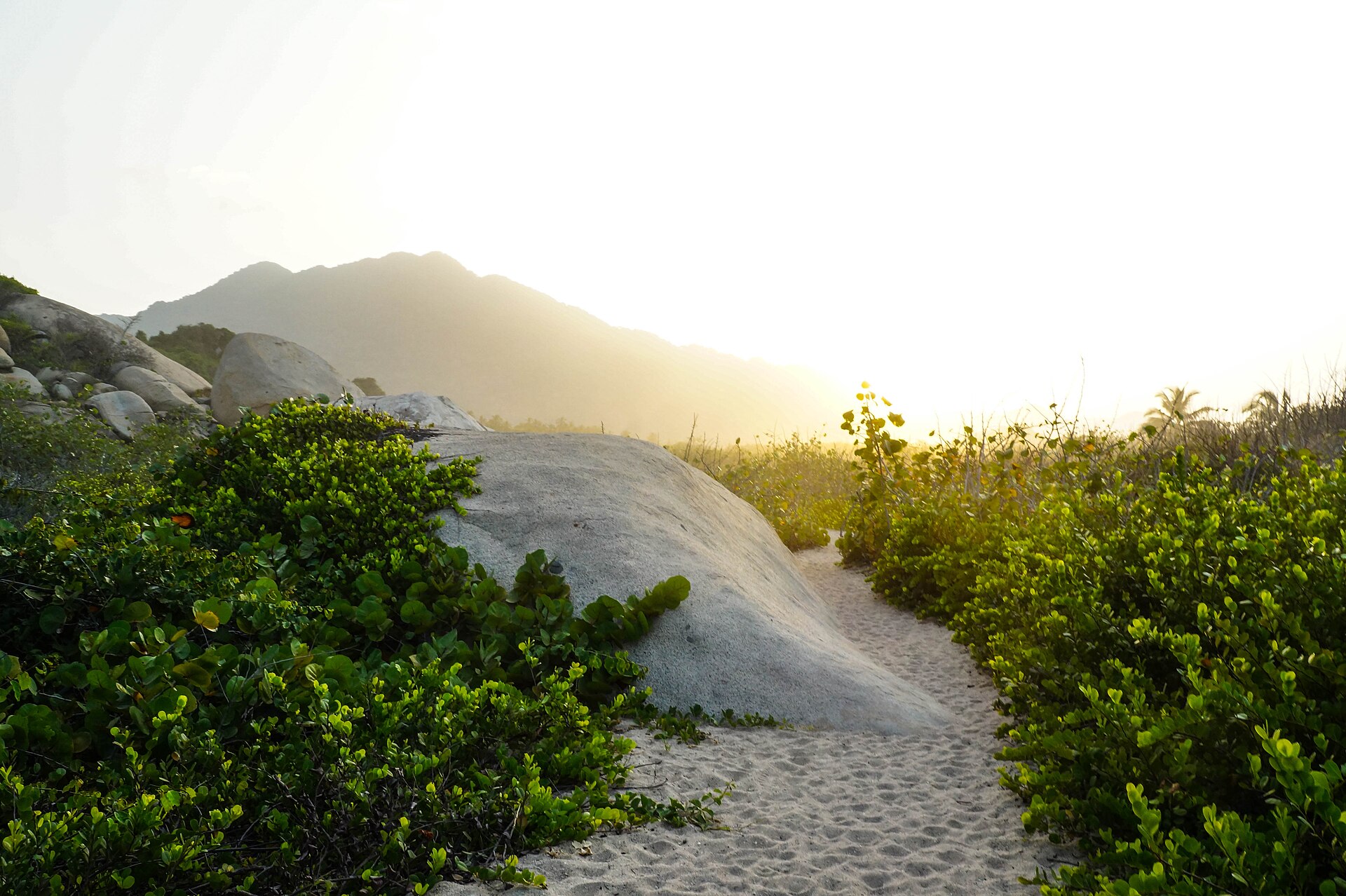
Approach the forest and Caribbean shore with an understanding of the territory behind the scenery.
Approach the forest and Caribbean shore with an understanding of the territory behind the scenery.
Editorial guide with source links. Check current arrangements before visiting. Our sources & approach
Tayrona: a living coast
- A GOOD FIT IF
- THE TRADE-OFF
Tayrona brings forest, rocky coast and Caribbean water into a remarkably varied landscape. It is also ancestral territory, with a cultural meaning that extends well beyond the visitor paths. Begin your planning with both stories in mind. A successful outing can be a carefully chosen walk and time observing the shore, without needing to reach every beach that appears in photographs.
The national park describes its place within the ancestral territory of the Kogui, Wiwa, Arhuaco and Kankuamo peoples. Its management plan was developed with those four Indigenous peoples, and annual periods of closure allow environmental, cultural and spiritual work. Check the park’s own calendar and visitor arrangements before setting your travel dates. Treat a closure as part of caring for the place, rather than a gap to work around.
The landscape contains several distinct habitats, including dry forest, mangroves, coastal lagoons and coral formations. Notice the transitions as you walk: a change in vegetation or the shape of the shore can tell you more than a hurried sequence of viewpoints. Choose a route from the current visitor information and follow the directions given at the entrance. Do not infer permission to enter the water from the appearance of a beach.
Keep the day practical. Confirm the entrance you need, the walking involved and your return arrangements; a photo rarely shows the journey required to reach its viewpoint. Check what you may bring and which facilities are available on your route. Keep wildlife encounters at a respectful distance and carry away your rubbish. Leave time to sit, listen and look again at the forest meeting the sea. The most rewarding memory may be a detail you had not planned to find.
THE LITTLE THINGS YOU MIGHT BE WONDERING
Before you decide.
GOOD FINDS. YOUR DIARY.
Not planning yet?
Keep the idea.
Save this guide to your favourites. It stays an idea—not an automatic plan in your trip.
The detail behind the guide.
Original sources are linked below.
Sources & fact-checking
- www.parquesnacionales.gov.co Source used for this local guide.
Save the places that suit your trip. Photographs are credited archive images; they do not show live conditions. Images may be resized, converted to WebP and cropped for this layout. CC BY-SA photographs and their displayed crops remain under their credited licences.